
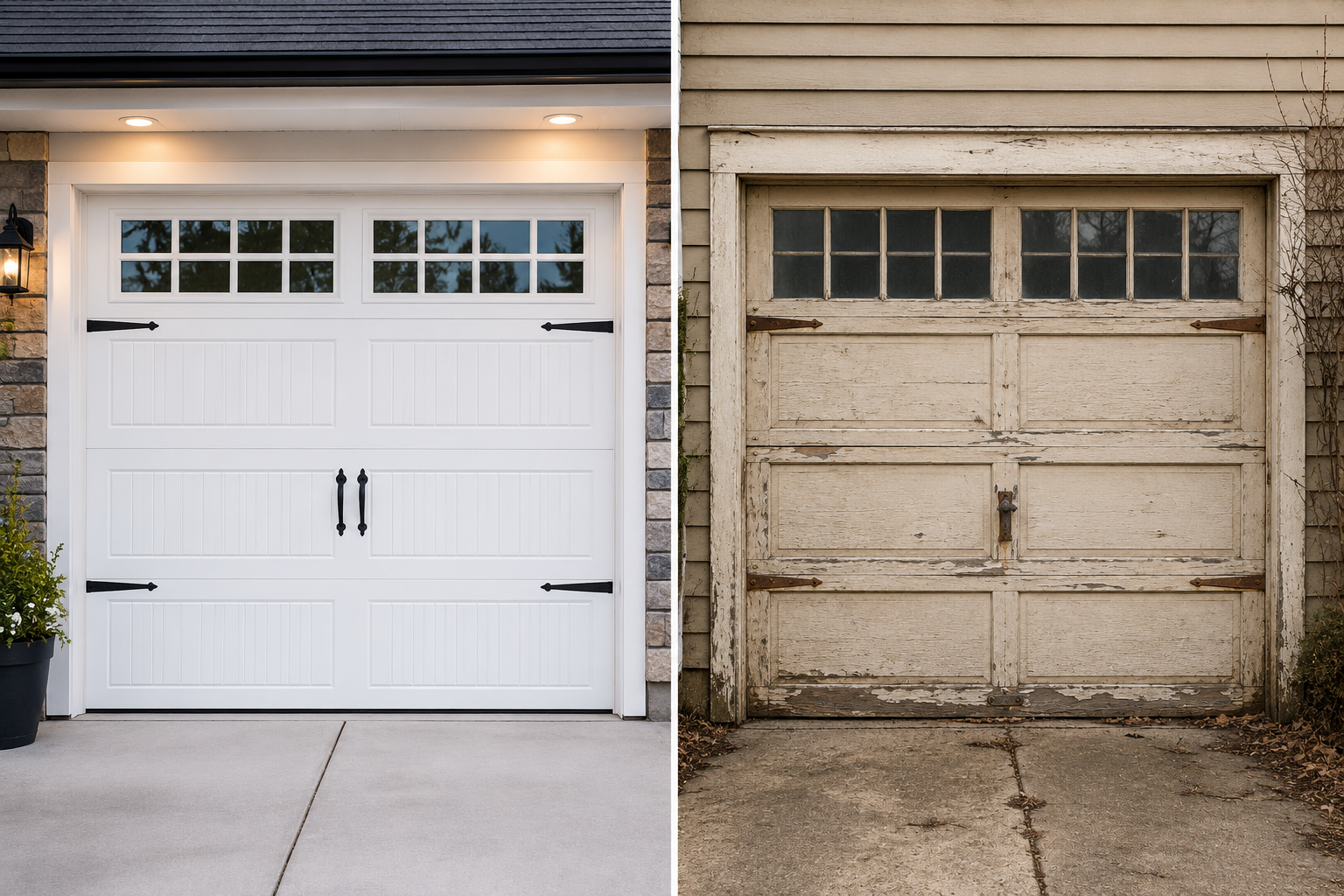
A garage door isn't one thing - it's a system of parts that each wear out on their own schedule. The door panels might look fine while the springs are on their last legs. The opener might be running strong while the rollers are grinding themselves to dust. Knowing the lifespan of each component helps you plan ahead instead of getting caught off guard.
Lifespan by Component
Door Panels
Steel panels last 20 to 30 years with basic maintenance. Wood can warp or rot sooner in Colorado's dry climate if not sealed regularly. Impact damage from cars or hail shortens the lifespan regardless of material.
Torsion Springs
Standard springs are rated for 10,000 cycles - roughly 7 to 12 years at two uses per day. High-cycle springs (25,000+ cycles) last significantly longer. Colorado's temperature swings accelerate wear.
Garage Door Opener
A quality belt or chain drive opener lasts 10 to 15 years. Running an opener against a worn or unbalanced door strains the motor and cuts that lifespan down significantly.
Rollers
Steel rollers last around 10,000 cycles. Nylon rollers are quieter and last a similar length of time but crack and flatten rather than grinding out. Annual lubrication extends the life of both.
Cables
Lift cables are under significant tension every cycle. They fray from the inside out, so damage isn't always visible. Inspect them annually for kinking, fraying at the drum, or rust.
Bottom Seal
The rubber seal at the floor takes the most abuse - UV, cold, snow, and constant compression. Replace it when it's cracked, flattened, or when you can see daylight under the door.
Why Colorado Shortens These Numbers
Every lifespan figure above assumes a moderate climate. Colorado is not that. The Front Range averages around 300 days of sunshine per year alongside hard freezes, hailstorms, and temperature swings that can hit 50 degrees in a single day. That combination does real damage:
- Springs contract in extreme cold, increasing stress per cycle
- Rubber seals crack faster in UV and dry air
- Wood panels warp and crack more quickly without regular sealing
- Hail dents steel panels and chips paint, exposing bare metal to rust
- Lubricants thicken in cold, adding friction to every moving part
The practical impact is that a spring rated for 12 years in a mild climate might fail at 8 or 9 years in Colorado. Factor that in when you're deciding whether to repair or replace aging components.
How to Get the Most Out of Every Component
The single most effective thing you can do is annual maintenance. A one-hour tune-up each fall covers lubrication, hardware tightening, balance testing, and a visual inspection of every component. It catches problems before they cascade - a dry roller that gets replaced for a small cost instead of grinding into the track and damaging it.
Beyond that:
- Replace springs in pairs, not one at a time - they wear together
- Upgrade to high-cycle springs if you use your door heavily
- Replace nylon rollers every 7 years as preventive maintenance
- Check the bottom seal every fall before winter
- Don't run an unbalanced door - it burns out the opener motor fast
When to Repair vs. Replace
Repair makes sense when one component fails and everything else is in good shape. If your spring breaks on a 5-year-old door, replace the spring. If your opener dies on a door with solid panels and new rollers, replace the opener.
Replacement makes sense when multiple things are failing, the door is cosmetically dated, or repair costs are stacking up toward the cost of a new door. We'll always give you an honest assessment - we're not going to push a new door when a repair is the right call.
Not Sure How Much Life Is Left in Your Door?
We'll inspect every component and give you a straight answer. Free estimates, same-day service across Denver metro and the Front Range.
Call (720) 978-3104