

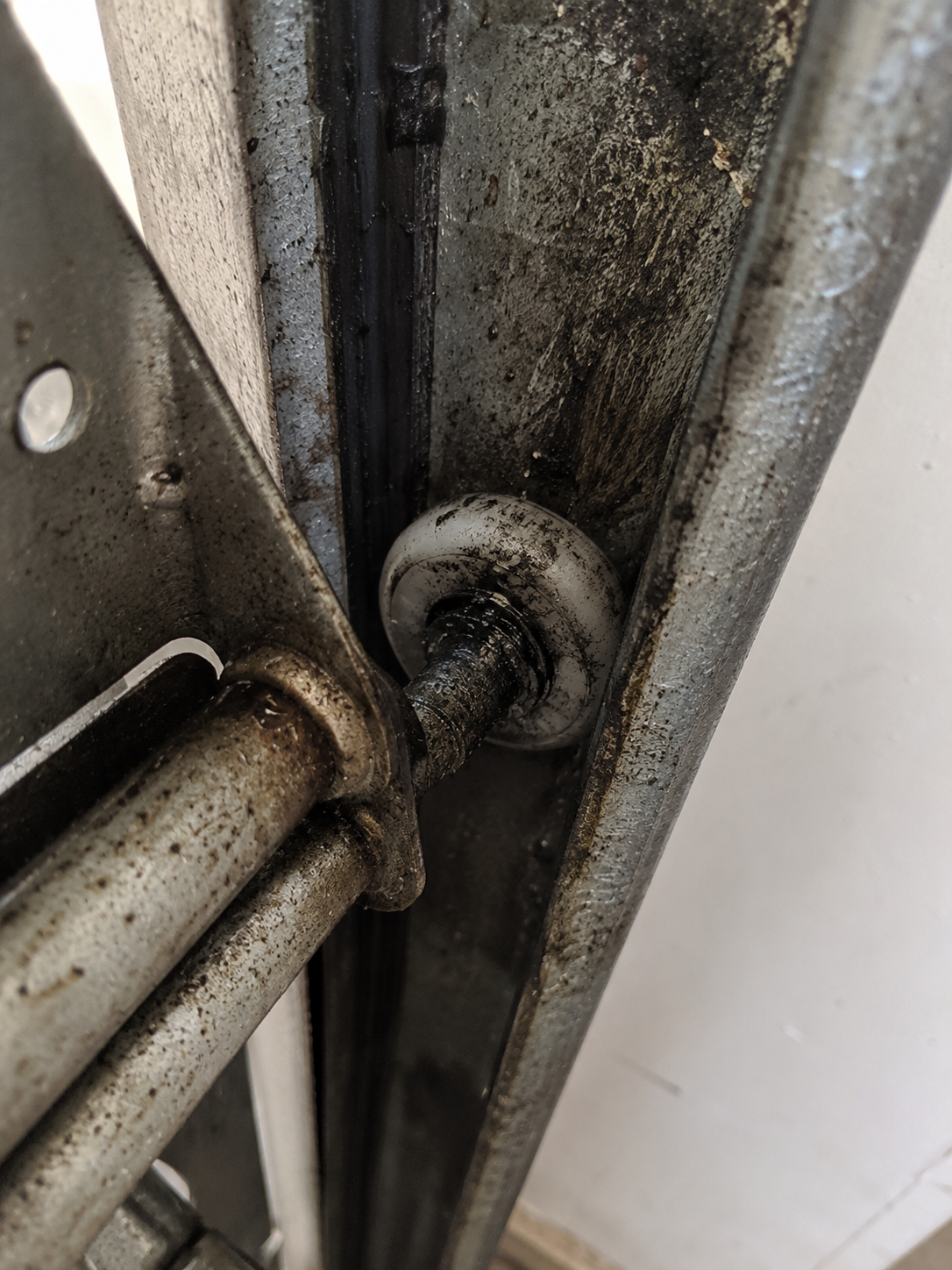
A garage door makes some noise - that's normal. But if it's grinding, squeaking, rattling, or banging every time it moves, that's the door telling you something is worn out or loose. The good news is that most noise problems have a clear source, and most of them are cheap to fix if you catch them early.
Here's how to read what your door is saying.
The Most Common Noises and What Causes Them
Worn or Dry Rollers
A grinding or scraping sound as the door moves almost always comes from the rollers. Rollers are the small wheels that ride inside the metal tracks on each side of the door. Steel rollers grind when they lose their lubrication or when the bearing inside starts to fail. Nylon rollers are quieter but crack and flatten over time, causing them to drag instead of roll.
Rollers typically last 7 to 12 years depending on use and maintenance. If yours are original to the door and the door is over a decade old, they're overdue.
Dry Hinges and Springs
A high-pitched squeak that happens at the same point in the door's travel usually comes from a hinge. Each panel section is connected to the next by hinges, and when those hinges go dry they squeak against the hinge pin. Springs can also squeak as the coils rub against each other, especially in dry Colorado air.
Loose Hardware or Panels
A rattling or vibrating noise - especially one that's gotten worse over time - usually means hardware has worked itself loose. Nuts and bolts on the track brackets, hinges, and opener rail loosen naturally from thousands of open-and-close cycles. Loose panels are another culprit: if a panel has taken a hit or the weather stripping has failed, you'll get a vibration or low rattle as the door moves.
Loose panels are worth addressing beyond the noise. A panel that's cracked or pulled away from the frame lets in cold air, pests, and water. If the damage is significant enough, a single panel replacement is often cheaper than people expect and avoids replacing the whole door.
Unbalanced Door or Worn Opener Chain
A loud bang or thud - usually at the top or bottom of travel - points to one of two things. An unbalanced door will slam down or jerk upward at the end of its range because the spring tension isn't holding it correctly. A chain-drive opener with a worn or loose chain will also slap and bang as it moves.
The Fastest Fix - A Tune-Up
Most noise problems don't appear one at a time. Dry hinges, worn rollers, and loose hardware tend to develop together because they all share the same cause: years of use without maintenance. That's exactly what a tune-up addresses.
A tune-up from our team covers:
- Full lubrication of springs, rollers, hinges, and tracks
- Tightening of all hardware - bolts, nuts, and track brackets
- Door balance test and spring tension adjustment if needed
- Roller inspection and replacement recommendation if worn
- Safety sensor test and alignment check
- Opener force and limit settings review
Most homeowners are surprised at how different the door sounds after a tune-up. A door that was grinding and rattling every morning often runs almost silently once the hardware is tight and lubricated. It also runs faster, puts less strain on the opener motor, and is less likely to need an emergency repair in the near future.
When Noise Means a Bigger Problem
Not every noise is a quick fix. A grinding that gets suddenly worse, a bang followed by the door moving crookedly, or a scraping that stops the door mid-travel can all indicate a broken spring, a cable off the drum, or a roller that has jumped the track. In any of those cases, stop using the door and call us. Operating a door with a structural problem can cause further damage and is a safety risk.
Noisy Door? We Can Quiet It Down.
A tune-up takes about an hour and makes a bigger difference than most people expect. Same-day appointments across Denver metro and the Front Range.
Call (720) 978-3104